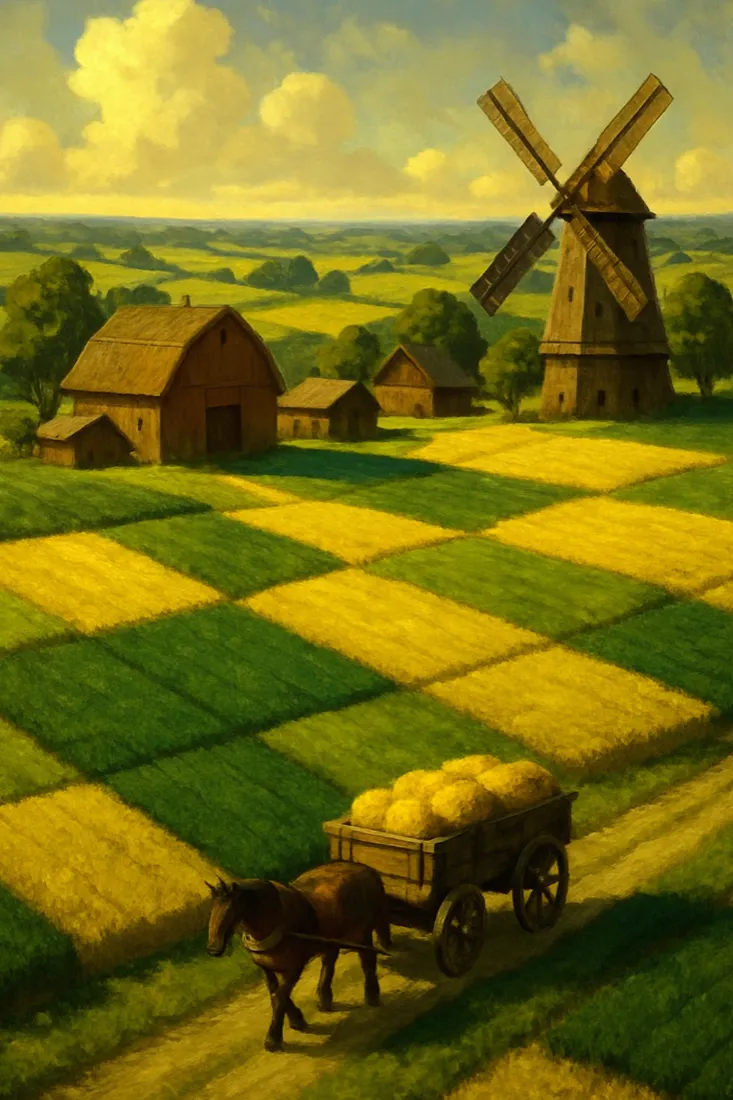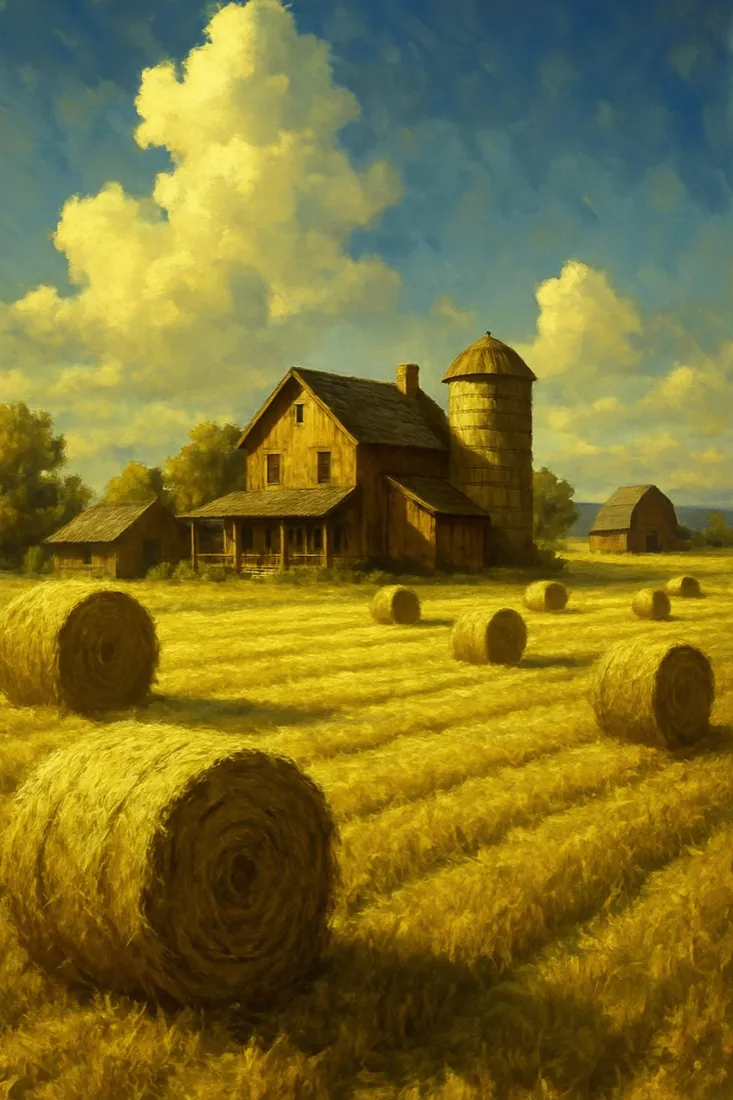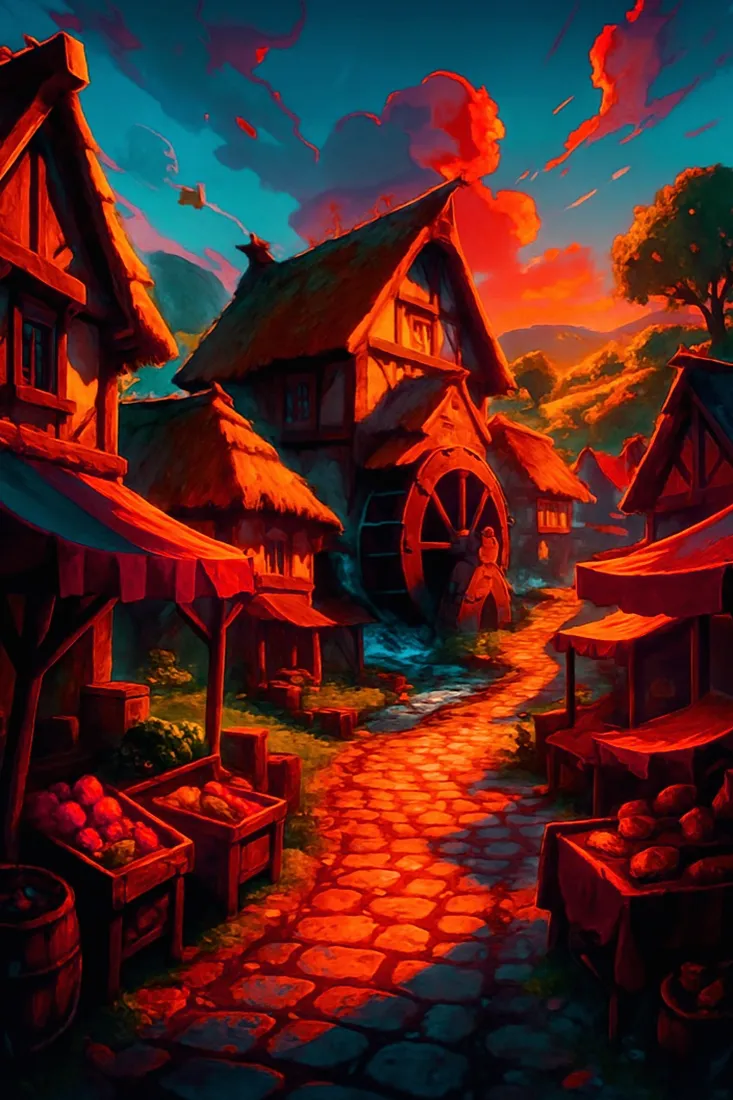
The opening of My Little Farmies is deliberately modest. You get a small piece of land, a few fields and a handful of villagers, and the game asks you to plant wheat. Then it asks you to grind the wheat into flour, and then to bake the flour into bread. That chain is the whole philosophy in miniature, and the game spends weeks expanding it in every direction.
Upjers lists 112 animals, 138 buildings, 68 plants, 915 goods and more than 2,000 decorations on its own page for the game, and after a few weeks we believed every figure. This is not a farm so much as a medieval village economy, with lovingly animated workers trudging between workshops. It is the title we would hand to anyone who has ever said a farming game felt too shallow.
Wheat, flour, bread and everything after
Production chains are the spine of the game. Cows give milk for the dairy, chickens give eggs, fields give grain, and each raw material feeds a workshop that turns it into something more valuable. The chains branch quickly, so one crop might feed two or three different products, and deciding where each batch goes becomes the main puzzle of a session.
You also decide who buys. The game lets you choose which goods go to which customers, including wholesalers and travelling merchants, so selling becomes a choice rather than a button. That small freedom matters. It means two players with identical villages can run very different economies, and it gave our team plenty to argue about over coffee.
North Sea, Dark Forest and a volcano
As you level up, special regions open where unusual plants grow. The official list includes the North Sea, the Dark Forest and the Volcano Region, and each one adds a fresh set of resources to weave into your chains. Travel adventures with caravans and special buildings give you a reason to look beyond the village walls, which keeps the long middle stretch from feeling static.
These regions are where the game’s scale really shows. A new area means new goods, which means new workshops, which means rethinking the village layout you were proud of last week. Some players will love that churn; others will find it relentless. We fell into the first camp, but we would not recommend it to anyone who wants a farm that ever feels finished.
Guilds, markets and the Hanseatic League
My Little Farmies has the richest social economy on the shelf. A Hanseatic League system handles trade and cooperation between players, and a marketplace lets you swap goods with others. You can also found or join a guild and sell your wares far and wide, which turns surplus into a resource rather than clutter.
Community events add a friendly competitive edge. Tower Building and the Tithe Tournament ask groups to pool effort toward a shared goal, and they suit the game’s cooperative mood. Nothing here involves combat; the village grows through production and trade alone. That gentleness, combined with the depth, is a rare pairing in browser games.
The price of so much choice
All that depth has a cost, and it is clarity. The interface carries a lot of information, and the first few weeks involve frequent trips into menus to remember which workshop makes what. We kept a paper note beside the keyboard for the first fortnight. Players who prefer a quick glance and a quick harvest may bounce off before the game opens up.
The premium currency is present in the usual places, around timers and decorative extras, and it never felt essential to a patient village. Our main complaint is pacing rather than pressure: some chains run long, and the early levels can feel slow when you already sense how much is waiting behind them. Persistence pays off, but it does need to be offered.
My Little Farmies: the first week of chores
- Complete the wheat-to-bread chain first; it teaches the logic every later workshop builds on.
- Place production buildings close to the fields and pens that supply them to keep the village readable.
- Experiment with selling to different buyers to see which ones value your goods most.
- Join a guild early, even a quiet one, so the marketplace and events open up for you.
- Keep a short written list of which workshop makes what until the menus become second nature.
What we love
- Production chains branch in genuinely interesting directions as the village grows.
- Choosing buyers for each batch turns selling into a real decision.
- Regions like the Volcano Region keep the long game fresh.
- A warm, combat-free village with charming animated workers.
What grates
- The sheer amount of information makes the first fortnight hard going.
- Early levels feel slow once you glimpse how much lies ahead.
- Constant new regions can make the village feel never finished.
The farmer My Little Farmies suits
Builders and planners who want years of material rather than weeks. If the idea of a medieval economy with hundreds of goods sounds exciting rather than exhausting, and you enjoy trading with other players, My Little Farmies will repay every evening you give it.
My Little Farmies, at harvest
My Little Farmies is the deepest country-life game we tested, a medieval village whose chains, regions and trade networks never seem to run out. It loses a few points for clarity and early pace, which is why it sits just behind My Free Farm 2. For a patient builder, though, it may well be the best long-term farm on the internet.