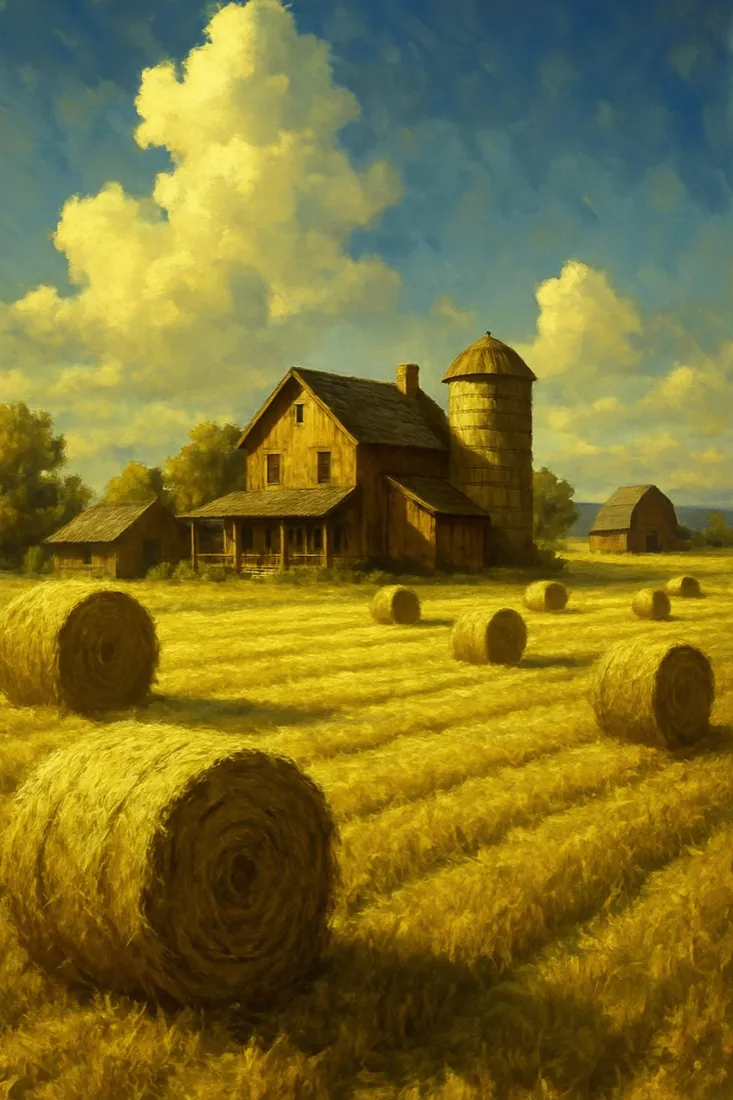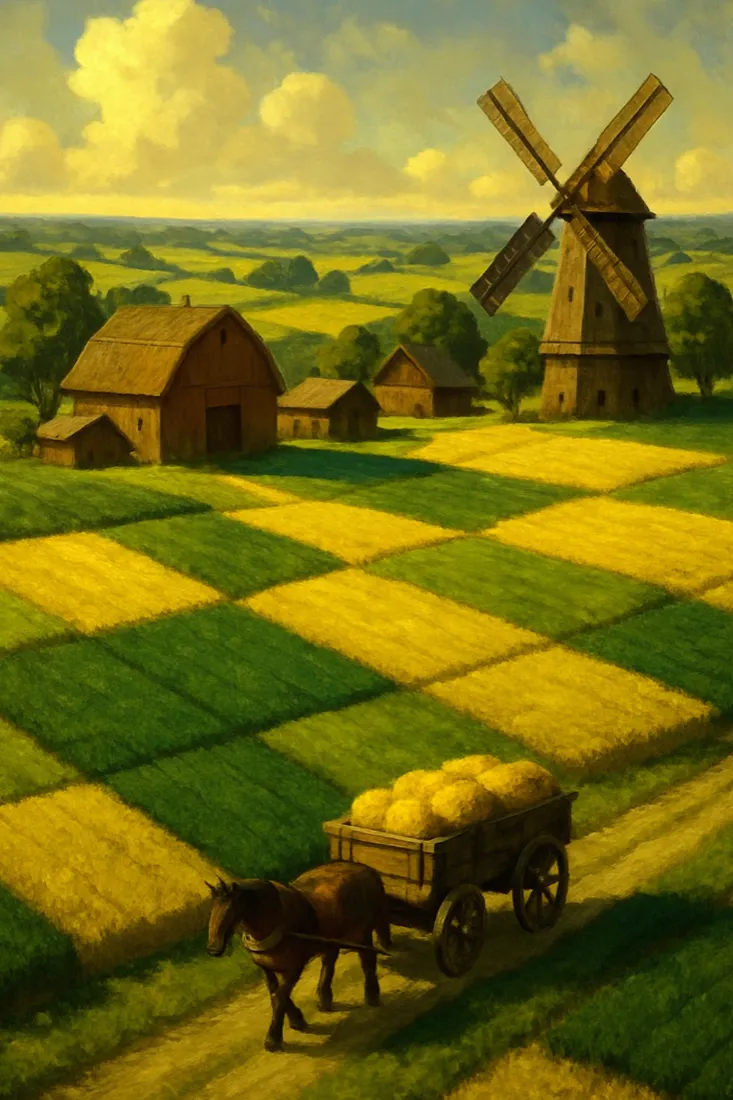
Most farming games stop at the harvest. You pick the tomatoes, a number goes up, and the field is ready for the next round. My Free Farm 2 treats that moment as the middle of the story. Tomatoes, cereals, sugar cane, cucumbers and flowers all head somewhere next, and the somewhere is usually a building that turns them into goods for a customer. That one design choice gives the whole game its pull.
We kept a farm going here for weeks, mostly in short visits before work and longer planning sessions on Sunday mornings. The routine settled faster than in any other game on the shelf, and it stayed interesting longer. By the second week we were juggling growth timers against standing orders and planning which field to free up next, which is exactly the kind of gentle puzzle the genre does best.
From seed to sale in a handful of buildings
The loop is easy to state and satisfying to master. You tend fields, look after goats, chickens and cows, and send the results into processing so that raw produce becomes something a customer wants. Selling those goods earns in-game money, which you reinvest in expanding the farm. Each new building widens the chain a little, and the game introduces them one at a time so the economy never arrives as a wall of icons.
What makes it work is that every step has a reason. A field of cereal is not just a field; it is the start of an order you already know is coming. That sense of purpose turns ordinary clicking into planning. When the timers line up and three chains finish within minutes of each other, the satisfaction is real, and it is earned by thinking rather than by spending.
Trucks, bulk orders and a pilot named Amy
Customers are only one outlet. You can also load goods onto a truck for delivery, or supply Amy the Pilot with bulk orders, which ask for larger quantities and reward a farmer who has been stockpiling sensibly. These orders give the week a shape. Instead of selling whatever happens to be ready, you start growing toward a target, and the farm feels like a working business rather than a pile of crops.
Bulk orders also expose bad habits quickly. Our first attempt ran short because we had sold too much of one ingredient the evening before. The fix was simply to keep a buffer, a lesson the game teaches without a single pop-up lecture. It is a small example of what we like most here: the economy explains itself through consequences rather than tutorials.
The bistro and the night shift
Later on you can open your own bistro and serve culinary treats to guests, which adds a kitchen to the end of several chains. It is a lovely payoff, because dishes pull together goods you have been making for days. Seeing a plate come out of ingredients you grew and processed yourself is the closest any browser farm comes to a sense of craft.
Then there is night mode, where mushroom farming begins. It is a simple idea, a darker version of the farm with its own crop, but it changes the feel of an evening visit. The game also mentions freshly tapped beer among its later goods. Neither feature reinvents the genre, yet both prove that the developers keep finding reasons to look at a familiar farm with new eyes.
Where the shop makes itself felt
Like every game on this shelf, My Free Farm 2 has a premium currency, and it appears most around long timers and expansion. We never felt blocked, but there were evenings when a field sat waiting and the shop button glowed a little too brightly. Patient players lose nothing important by ignoring it; impatient ones will notice the temptation more than in Farmerama or Horse Farm.
The other gripe is density. Once several chains are running, the screen fills with buildings and indicators, and finding the one finished batch among them takes a moment. A first-time farmer may feel crowded by week three. Neither issue changes our ranking, but both explain why the fairness score sits a couple of points below the depth score.
My Free Farm 2: the first week of chores
- Plant every free field on day one, even with cheap crops, so you learn the timers before the first order arrives.
- Follow the early quests closely; they unlock processing buildings in a sensible order and explain each one briefly.
- Keep a small buffer of every ingredient instead of selling everything the moment it is ready.
- Try your first truck delivery by midweek to see how orders shape your planting choices.
- Spend the weekend sketching which field to repurpose next, before the next expansion becomes available.
What we love
- Every crop has a destination, which turns harvesting into genuine planning.
- Bulk orders for Amy the Pilot give each week a clear target.
- The bistro pulls several chains together into a satisfying payoff.
- Night mode and mushrooms add a fresh mood to evening visits.
What grates
- Long timers make the premium currency feel louder in later stages.
- A busy farm grows visually cluttered and hard to scan quickly.
- New players can feel crowded once three or four chains overlap.
The farmer My Free Farm 2 suits
Farmers who enjoy thinking a step ahead and want their harvest to mean something. If you like watching a plan come together over several days, and you are happy to check in twice a day, this is the richest farm on the shelf and the one we keep returning to.
My Free Farm 2, at harvest
My Free Farm 2 earns its top spot by giving every field a reason to exist. Processing chains, bulk orders, a bistro and a night shift combine into an economy that rewards patience and forethought. It can get busy and the shop occasionally leans in, but no other free browser farm made us plan our week around it with such pleasure.